32 countries · 605 million people

From landlocked to landlinked

Data, country profiles and analysis on the 32 countries that reach world markets through their neighbours' roads, railways and ports.

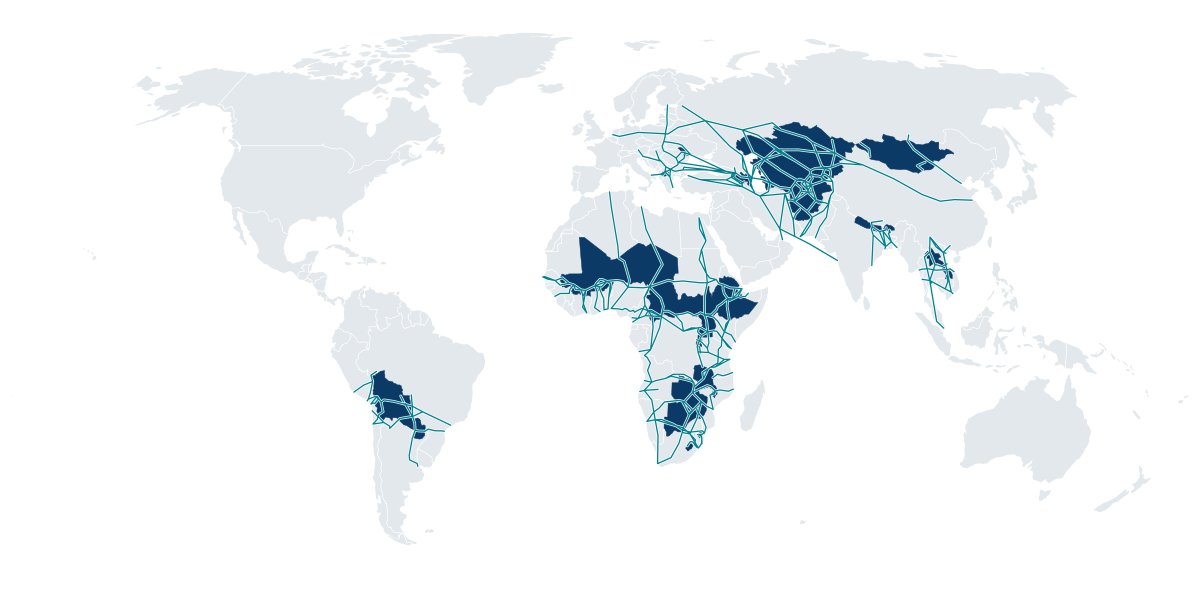
World map with the 32 landlocked developing countries shaded and the 108 corridors that serve them drawn as lines
Landlocked developing countries108 corridors that serve themOpen the Connectivity Atlas
Population
605.4M
2025 · +2.2% on the year before
GDP
$1.33T
2025, current US$ · +6.5%
GDP growth
6.0%
2025, real
Human Development Index
0.563
2023 · 38% below the OECD
Aggregates for the 32 LLDCs. Sources: World Bank, UNDP.

The 32 countries

Population (2025) and real GDP growth (2025) from the World Bank; an earlier year is shown where the latest is missing. Regions follow UN-OHRLLS.

Latest story · 20 May 2026

Water Towers Without a Coast: Landlocked Nations and the World Water Architecture

A briefing for the 2026 Dushanbe Water Conference — how the world's 32 Landlocked Developing Countries hold the headwaters, carry the largest SDG 6 access gaps, and sit at the front of the climate-water risk curve

7LLDCs drawing >85% of electricity from water
10×LLDC hydropower share vs other developing economies
Annual report data

State of the LLDCs

Progress on the Awaza Programme of Action (2024–2034) across its five priority areas: structural transformation, trade, transit and connectivity, climate resilience, and means of implementation.

Open the dashboard

About the LLDCs

There are 32 landlocked developing countries (LLDCs) across Africa, Asia, Europe and South America. Without direct access to the sea, they face remoteness from world markets, high transit and trade costs, and dependence on their neighbours' infrastructure for international trade.

LLDCs are home to over 600 million people and include some of the world's fastest-growing economies. Landlinked brings together World Bank and UN indicators, CIA World Factbook profiles and group analytics to track their progress on trade, connectivity, education, climate and economic development.